I Came Home After Two Months Away — And AI Helped Me Figure Out What Invaded My Pantry | Edition 322
Edition 322 — ChatGPT identified pantry beetles from one photo and explained why two undisturbed months mattered more than heat.
Sometimes the best demonstration of AI isn’t writing code or building an agent. It’s figuring out what the heck is crawling around your flour.
I recently came home to Naples, Florida, after being away for roughly two months during the summer.
And I found a surprise waiting for me in a closet.
Tiny brown bugs. A lot of them.
Some were dead. A few were still alive and crawling around. And the apparent center of the problem was an ordinary paper bag of flour.
So instead of immediately calling an exterminator or spending an hour searching Google Images, I took a picture and showed it to ChatGPT.
That’s where this little experiment began.
What I Found
It was late August when I returned to my home in Naples.
The house had been closed up while I was traveling, but it was not sitting in extreme heat. The air conditioning had been running the entire time. Inside the house, the temperature was about 79°F and the humidity was approximately 40%.
So this wasn’t a case of the pantry turning into a hot, humid Florida greenhouse. Outside, of course, Naples was experiencing normal summer heat and humidity. But inside, conditions were controlled.
What had changed was something much simpler: the flour had been sitting undisturbed for nearly two months in its original paper bag.
Inside one of the closets was that bag of flour. Around it were dozens of very small brown insects. Some had died. Others were still crawling around the bag. And when I looked at the flour itself, it appeared that the insects had gotten inside and had been feeding and reproducing there.
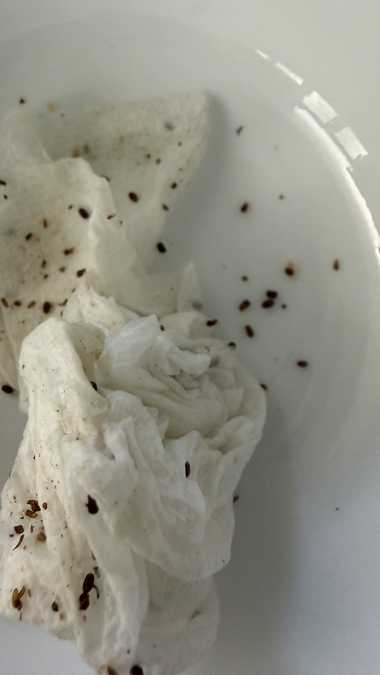
My first question was pretty straightforward:
“I live in Naples, Florida. It’s summer, and I went away for two months. Now it’s the end of August and I came back and there are a whole bunch of little bugs in the closet. There was a bag of flour, and they got into the flour somehow. There were a whole bunch of dead ones and a few live ones crawling around. How did they get in? What should I do? Did they get into anything else? Everything else was sealed.”
That is exactly the kind of question where visual AI becomes extremely useful. There isn’t much value in describing a bug as “tiny, brown, sort of oval, maybe a beetle.” A photograph contains far more information.
What ChatGPT Thought They Were
From the first photograph, ChatGPT identified the insects as very likely belonging to the family of pests commonly called stored-food or pantry beetles. Initially, possibilities included flour beetles and other grain pests.
But I then took a much closer photograph.
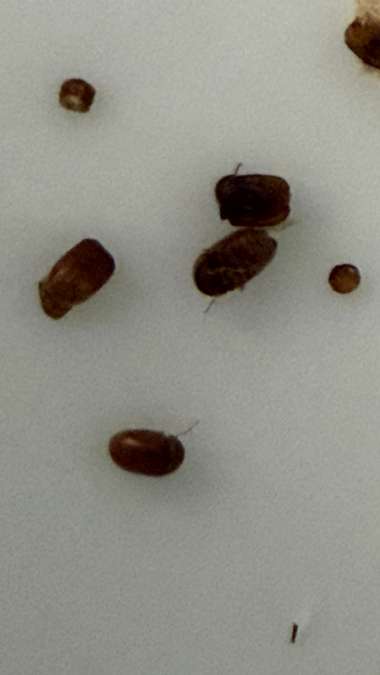
With the second photograph, the identification became more specific. ChatGPT said they looked most like either drugstore beetles or cigarette beetles rather than the classic flour beetle or grain weevil.
Both are common stored-food pests. They’re tiny — about the size of a sesame seed. They’re reddish-brown. They’re oval. And their heads tend to be tucked underneath the front portion of their bodies, giving them a slightly hump-backed appearance.
An important caveat: identifying a tiny insect species from a smartphone photograph isn’t the same thing as examining it under a microscope. But for dealing with the infestation, the exact species doesn’t matter very much. The recommended treatment is essentially the same.
The Interesting Question: How Did They Get Into the Flour?
My first instinct was: how did these bugs get into a closed house and find this bag of flour?
But that probably isn’t what happened. The more likely explanation is much more interesting: they may have already been there.
Stored-food insects can enter the food supply somewhere along the chain — grain storage, processing, packaging, warehouses, distribution, grocery stores, or occasionally inside the home. A package can contain microscopic eggs or extremely small larvae without anyone noticing.
Then the flour sits there. And sits there. And sits there.
In my case, it sat for approximately two months without anyone opening the closet, moving the bag, using the flour, or noticing what was happening.
The house itself was maintained at around 79°F and 40% humidity, so the infestation probably wasn’t caused by unusually harsh indoor conditions. Instead, the bigger factors were likely: time, an undisturbed food source, and paper packaging that was not insect-proof.
That gave whatever was already present plenty of time to develop. Once adult beetles emerged, they began wandering outside the flour bag. That’s when I noticed them.
But The Flour Bag Was Closed
This is another important lesson: a normal paper flour bag is not an insect-proof container.
Stored-product insects can get through tiny openings around folded seams, glued seams, corners, wrinkles, and small tears. Some pantry pests can even chew through thin paper, cardboard, and certain lightweight plastic packaging.
So a bag can look perfectly normal while insects are developing inside it. That means the flour doesn’t necessarily need to have been “left open.” And in my case, it wasn’t — it was simply still sitting in the original paper packaging.
Why Being Away For Two Months Mattered
At first, I assumed Florida’s summer heat and humidity must have been the main culprit. But that wasn’t really accurate — the air conditioning had kept the house reasonably cool and dry.
The more important factor may simply have been that nobody was there.
Normally, a bag of flour gets moved, opened, used, inspected, replaced. And a pantry door gets opened constantly. For nearly two months, none of that happened. If the bag already contained a few eggs or larvae, they had a long uninterrupted period to develop.
By the time I returned, enough adult beetles had emerged that the problem was obvious. That also helps explain why I found both dead insects and a few still crawling around.
The First Thing ChatGPT Told Me To Do
Fortunately, the solution wasn’t “call an exterminator immediately.” It was much simpler.
Throw away the flour. The entire bag should go — not just scoop the beetles off the top, not sift the flour, not try to rescue it. Put the flour bag inside another plastic trash bag, seal it, and take it outside. The goal is to remove the insects, eggs, and larvae from the house rather than allowing them to continue spreading.
Then Clean The Closet
The next step was to thoroughly clean the area where the flour had been stored. ChatGPT recommended vacuuming first — paying particular attention to shelf corners, cracks, shelf-support holes, seams, joints, and areas where the shelving meets the wall. Tiny larvae or eggs can hide in surprisingly small spaces. Empty the vacuum outside, then wipe the shelves with ordinary soap and water.
Interestingly, ChatGPT specifically said that spraying pesticides inside the food-storage closet generally isn’t necessary. Removing the food source and cleaning the area is more important.
What About Everything Else In The Pantry?
This was my next concern — had these things gotten into everything?
Probably not, but certain foods deserved inspection. ChatGPT suggested checking rice, pasta, cereal, oatmeal, crackers, baking mixes, nuts, dried beans, spices, chocolate, pet food, birdseed, other flour, and anything packaged in paper or cardboard.
What should you look for? Tiny brown beetles, larvae, holes in packaging, webbing, fine powder, or unexplained debris around seams.
But foods stored in sealed cans, glass jars, or heavy airtight plastic containers are much less likely to be affected. That was encouraging, because most of my other foods had been sealed. The flour was the obvious weak point because it was still in the manufacturer’s original paper bag.
One Simple Trick If You’re Not Sure About A Package
Another suggestion was surprisingly easy: if there’s a dry food product you’re suspicious of but don’t want to throw away, you can freeze it. Several days in the freezer — many sources suggest about four days, some recommend up to a week for a margin of safety on eggs specifically — can kill most stages of common stored-food insects.
That doesn’t make already-contaminated food more appetizing. But it can be useful for unopened foods you’re simply worried may contain insects.
How To Prevent This From Happening Again
The longer-term solution is also simple: don’t leave flour in the paper bag.
Instead, transfer products like flour, rice, cereal, grains, and baking ingredients into airtight containers. Glass works. Heavy-duty food-storage plastic works.
A good container does two things. First, it prevents outside pests from reaching the food. Second, if a package happens to contain insects when you buy it, they remain confined to that container instead of spreading through the pantry.
That’s probably the biggest change I’ll make after this experience.
Then I Asked AI What I Should Buy
After cleaning everything out, I wanted a way to know whether there were still insects hiding somewhere else. ChatGPT suggested pantry beetle pheromone traps. So I searched Amazon.
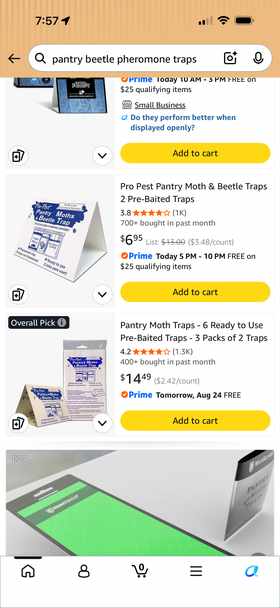
One of the products that appeared was Pro-Pest Pantry Moth & Beetle Traps. A two-pack was about $6.95 in the screenshot.
ChatGPT suggested starting with the two-pack rather than buying six traps. The idea would be to place one trap near the closet where the flour was, and one in the nearby kitchen or pantry area.
But Here’s An Important Point About The Traps
A pheromone trap isn’t magic. It isn’t going to eliminate a serious pantry infestation by itself. Its best use is detection and monitoring.
If you’ve already removed the contaminated flour and cleaned the pantry, the traps help answer another question: are there still adult beetles emerging from something I missed?
If the traps remain empty over time, that’s reassuring. If beetles continue appearing, you probably have another contaminated product somewhere. That turns the trap into a kind of early-warning system.
What I Liked About Using AI For This
This wasn’t some revolutionary AI application. And that’s exactly why I thought it was worth sharing.
In about a few minutes, I was able to go through this process: photograph an unfamiliar insect, get a likely identification, understand where it probably came from, learn whether it was dangerous, determine what food needed to be discarded, determine what other foods needed inspection, learn how to clean the pantry, find a way to monitor whether the problem was gone, and search for an inexpensive product to help.
That’s a completely different experience from traditional internet search. With Google, I might have searched “tiny brown bug in flour Florida,” then “flour beetle vs drugstore beetle,” then “how to get rid of pantry beetles,” then “can pantry beetles get into sealed packages,” then “best pantry beetle trap.”
AI connected those questions into one continuous conversation. And when the first photograph wasn’t good enough for an exact identification, I simply took a better photograph. The conversation improved as the information improved.
This Is Where Multimodal AI Gets Interesting
For years, most of our interaction with computers required translating the physical world into words. You had to tell the computer what you saw.
Now you can increasingly just show it. Take a picture of an insect, a plant, a leaking pipe, a broken appliance, a strange dashboard warning, a product label, a restaurant menu, a damaged part, an electrical panel, a stain, a piece of furniture you’re trying to assemble. Then ask questions about what you’re seeing.
That doesn’t mean you should blindly trust every answer. Visual identification can be wrong. The photograph may be unclear. Different species may look almost identical. And anything involving significant health, structural, electrical, chemical, or safety risks deserves appropriate professional verification.
But for everyday problems like this one, the usefulness is undeniable.
My Pantry Beetle Verdict
Based on the photographs, these were almost certainly stored-food beetles — probably drugstore beetles or cigarette beetles. The flour was probably the source. The insects may have entered the product somewhere in the supply chain as eggs or larvae and then developed while the flour sat undisturbed for almost two months.
Importantly, the house itself was being air-conditioned and stayed around 79°F with approximately 40% humidity. So the lesson isn’t simply that a hot, humid Florida house caused the infestation. The bigger issue was that the flour remained in an ordinary paper bag, untouched for weeks, giving a small hidden infestation time to become a very visible one.
The solution: discard the flour, inspect other dry foods, vacuum and clean the pantry, avoid unnecessary pesticide, move dry foods into airtight containers, and use pheromone traps to monitor for any remaining beetles.
Problem understood. Action plan made. And it all started with taking a picture.
The Bigger AI Lesson
We’re spending enormous amounts of time discussing which AI model scores highest on benchmarks.
But here’s another benchmark: can it help you solve something annoying in your house before breakfast?
In this case, yes. And sometimes that’s the kind of AI progress people actually notice.