Why a Translated Menu Still Doesn't Tell You What to Order | Edition 344
Edition 344 — Two menus, a wine list, and an award card, translated word for word and then actually explained.
Two things arrive at your table every night in Italy that you can't read: the menu and the wine list. A translation app handles both the same way, and stops in the same place.
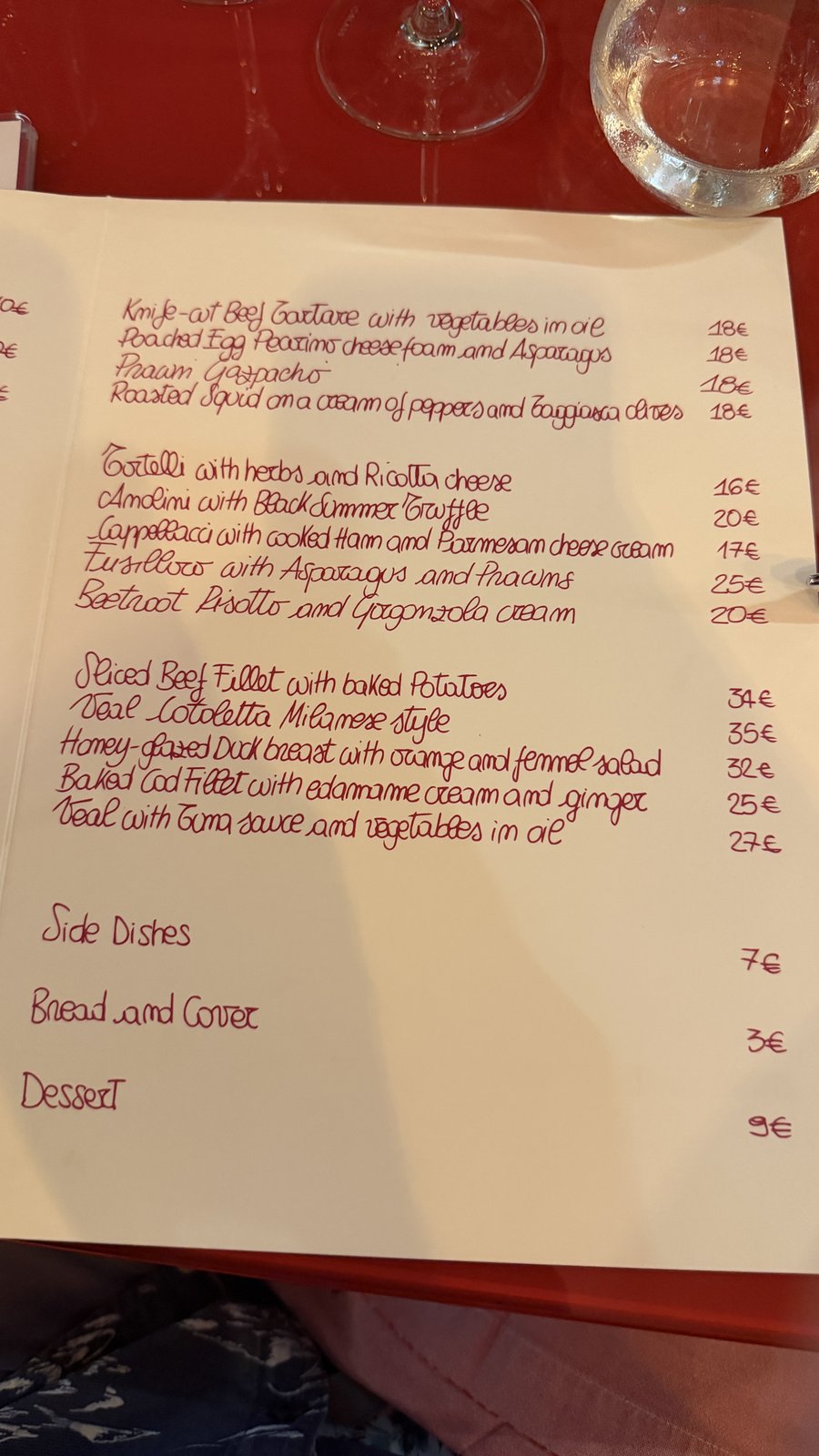
Run “Tagliata di Manzo” through a word-for-word translator and you get “sliced beef.” Accurate. Not remotely enough to decide whether to order it.
What a translation gives you
A list of English words next to the Italian ones: sliced beef, veal cutlet, duck breast, cod fillet. Correct, and it tells you nothing about which one to actually order.
What asking gives you
The cut of meat, how it's cooked, whether it's a regional specialty, how rich it'll taste, what to drink with it, and whether it's worth the price sitting next to it on the page.
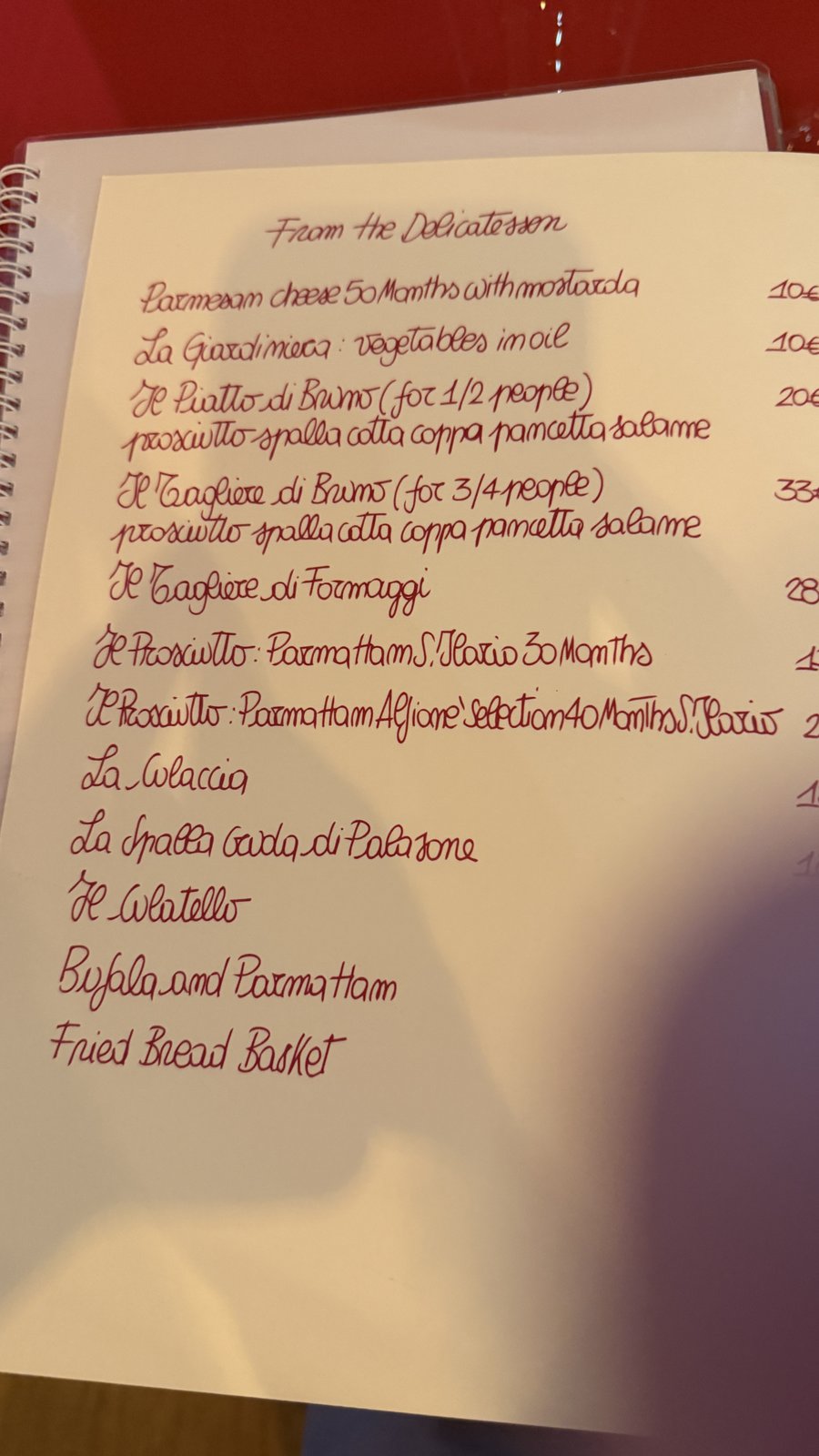
The delicatessen board is the more extreme version. A translation gets you “Parma ham, 30 months, 40 months.” Asking gets you why the aging time matters, which board is the better value for two people, and which one to skip.
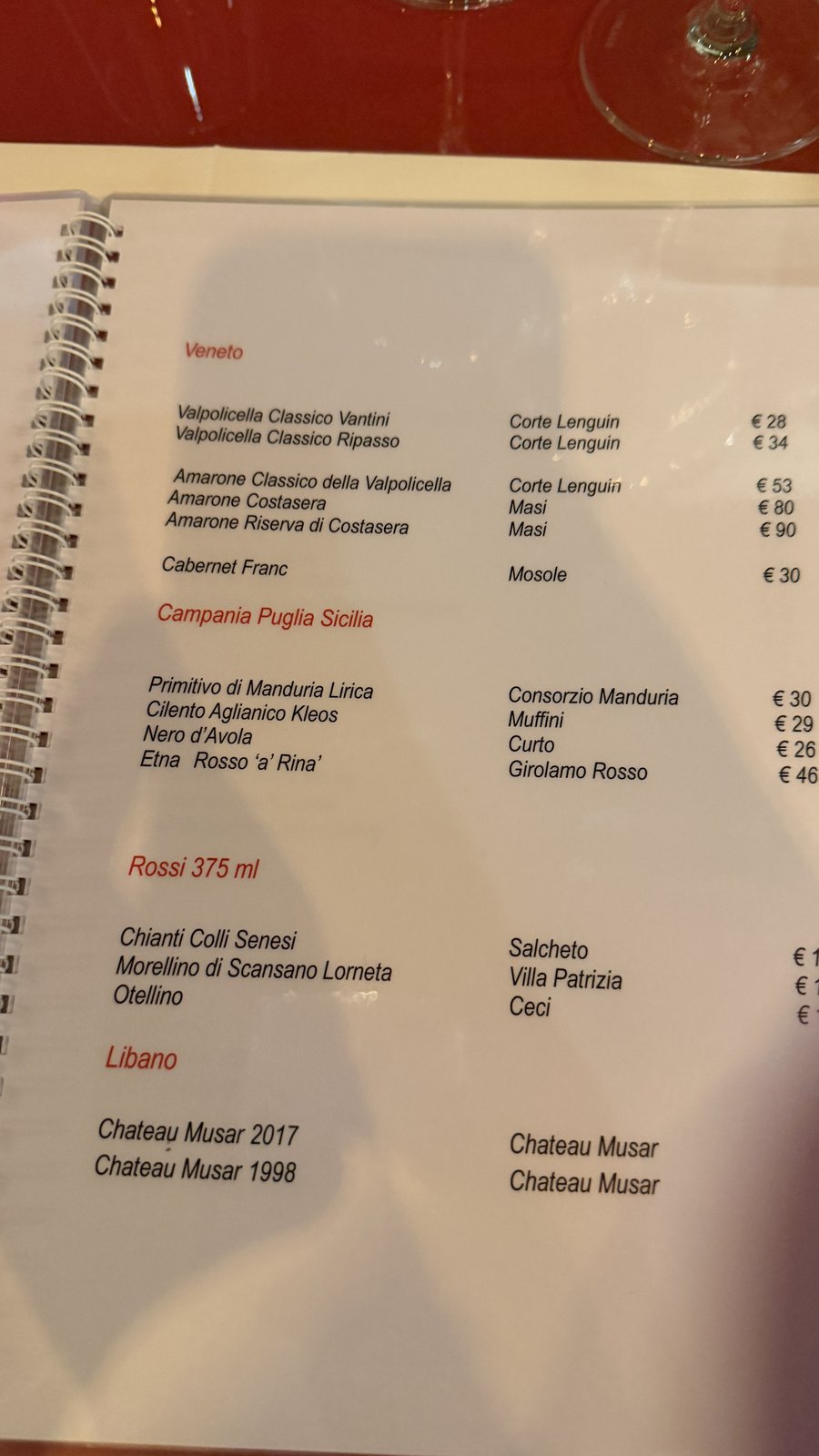
Then the wine list arrives, and it is the same problem wearing different clothes.
What we used to do
Pick something recognizable, or ask the waiter and nod along. Not necessarily worse, but not actually informed either.
What changed
Every list became one question: “which bottle should we order?” The answer came back with body, region, value, and pairing — and, more than once, a push toward the cheaper bottle on the list, because it was genuinely the better pour that night.
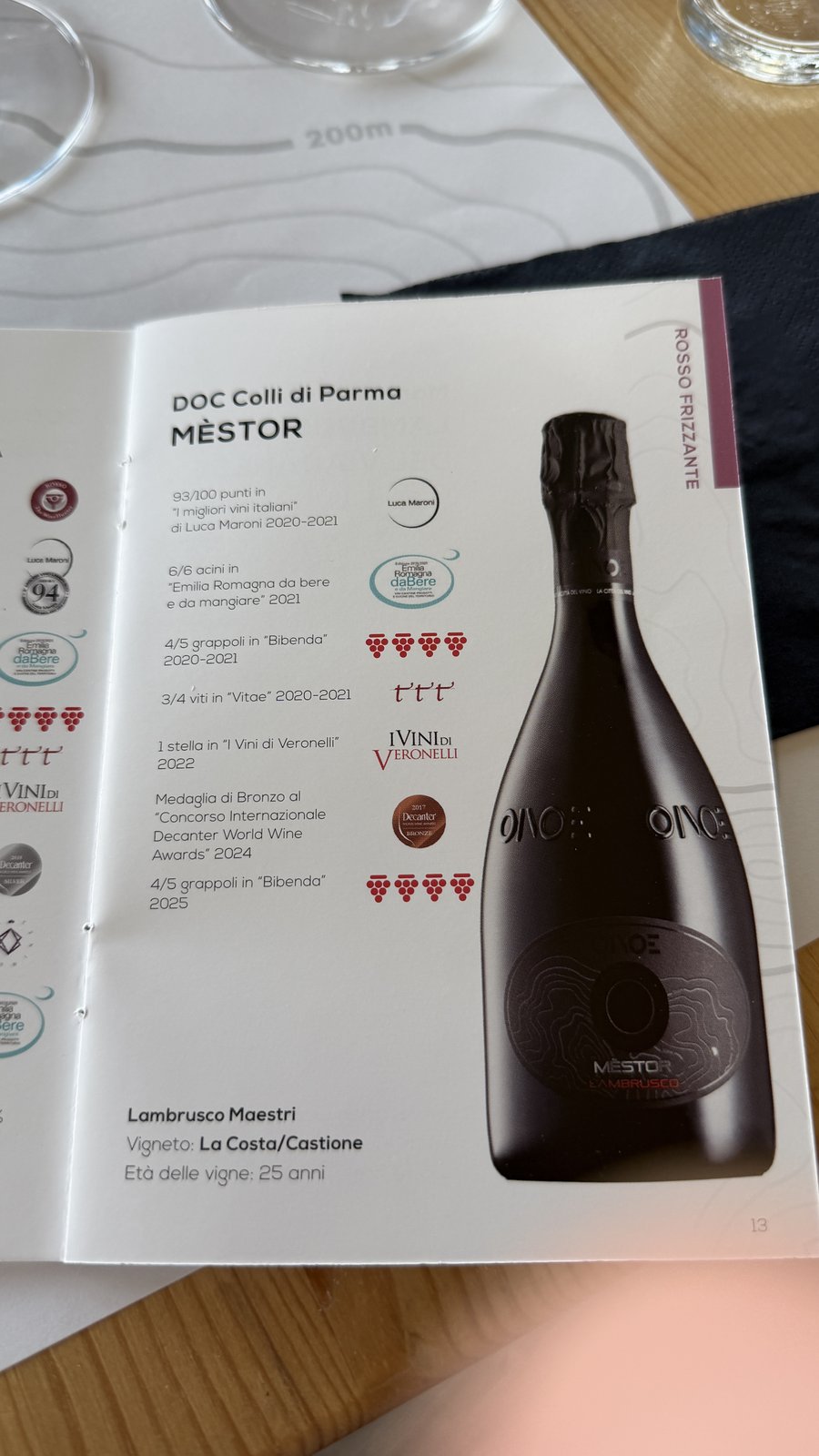
Some bottles came with their own printed brochure of awards and scores, like this Lambrusco. That is exactly the kind of thing that is easy to either blindly trust or completely ignore. Asking got us what the scores actually meant, and whether they were worth taking seriously.
| What's in front of you | Word-for-word translation | Asking AI |
|---|---|---|
| Tagliata di Manzo | “Sliced beef” | The cut, how it's cooked, and whether it's worth the price beside it |
| Parma ham, 40 months | A number and a product name | Why the extra ten months matters, and whether to pay for the upgrade |
| A Veneto red you've never heard of | A grape and a producer | Body, region, pairing, and whether it beats the bottle above it |
| An award card of medals and scores | The words printed on the card | What the scores actually mean, and whether to trust them |
None of it required knowing anything about food or wine before we sat down. The words on the page never changed. What we understood about them did.