The AI That Painted a Masterpiece It Couldn't Count | Edition 280
Edition 280 - We asked two AI models to repaint Van Gogh's Sunflowers from words alone. Both captured the soul of it. Neither could count the flowers.
Quick question before you scroll. Van Gogh's Sunflowers — the famous one, the wall of yellow that's been on a thousand mugs and tote bags. How many sunflowers are in it?
Hold your guess. Most people say "a lot" and move on, because that's how the painting works — it's an impression of abundance, not a countable bouquet. You feel fifteen-ish sunflowers without ever counting to fifteen.
Which is exactly what makes it the perfect trap for an AI.
We gave two of the best image models — Google's Gemini 3 Pro and OpenAI's GPT-5 Image — a careful written description of the painting and asked each to produce a photorealistic version. No reference image. Just words: fifteen sunflowers, a pale-yellow background, a two-tone vase, a tall portrait canvas, each flower at a different stage of life.
Both came back with something genuinely beautiful. Warm, textured, unmistakably Sunflowers. If you glanced at either on a phone you'd nod and keep scrolling.
Then we started counting. And that's where it fell apart.
Why this painting, specifically
Van Gogh made the National Gallery Sunflowers in Arles in August 1888. It's the fourth of seven versions, and it's the one art historians call "yellow on yellow" — he painted yellow flowers against a yellow wall in a yellow vase, using barely three shades of yellow "and nothing else," as he put it. No safety net of contrast. One color doing all the work.
That's a flex when a human does it. It's a landmine for an AI. A model reproducing this scene can't lean on strong color separation to organize the image — it has to actually understand the arrangement. Fifteen distinct flowers, each at a different point between full bloom and gone-to-seed, packed into a vase against a background nearly the same color as the flowers themselves.
Easy to fake the look of. Hard to get right.
What the models got — and what they missed
Both images below are convincing photographs of sunflowers in a vase. The petals have texture. The light falls naturally. The vases have that earthenware two-tone Van Gogh painted. On mood, palette, and craft, both models did beautifully — genuinely better than most people expect if the last AI image they saw was a few years ago.
The problem is everything you'd want to count. And there's one difference you can spot without counting a thing — look at the shape of the two frames.
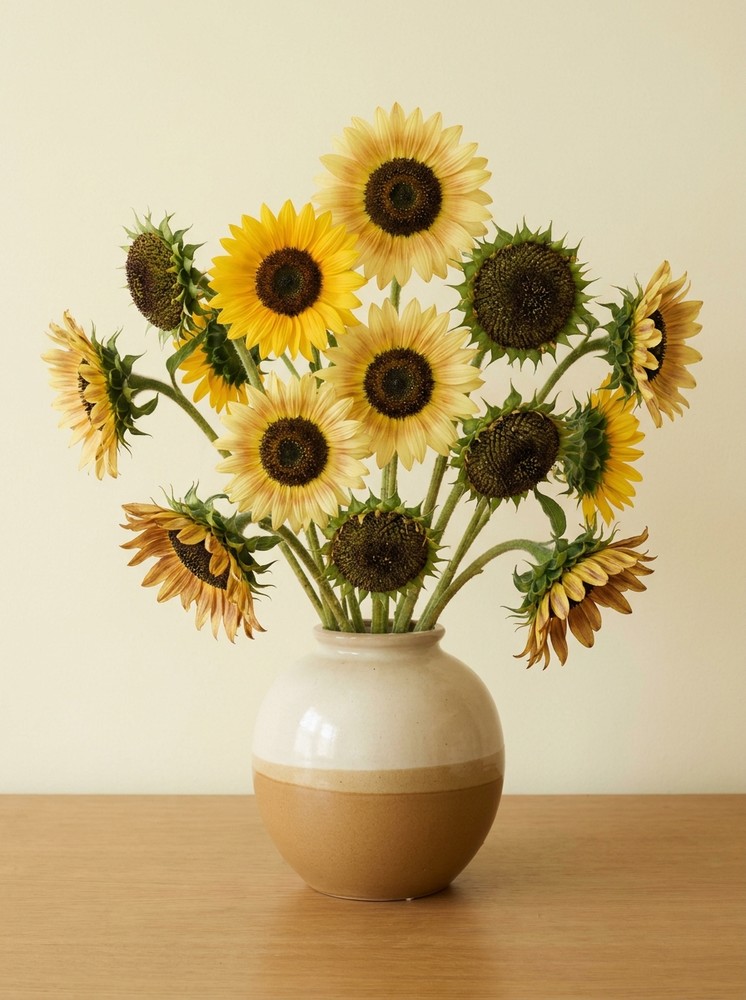
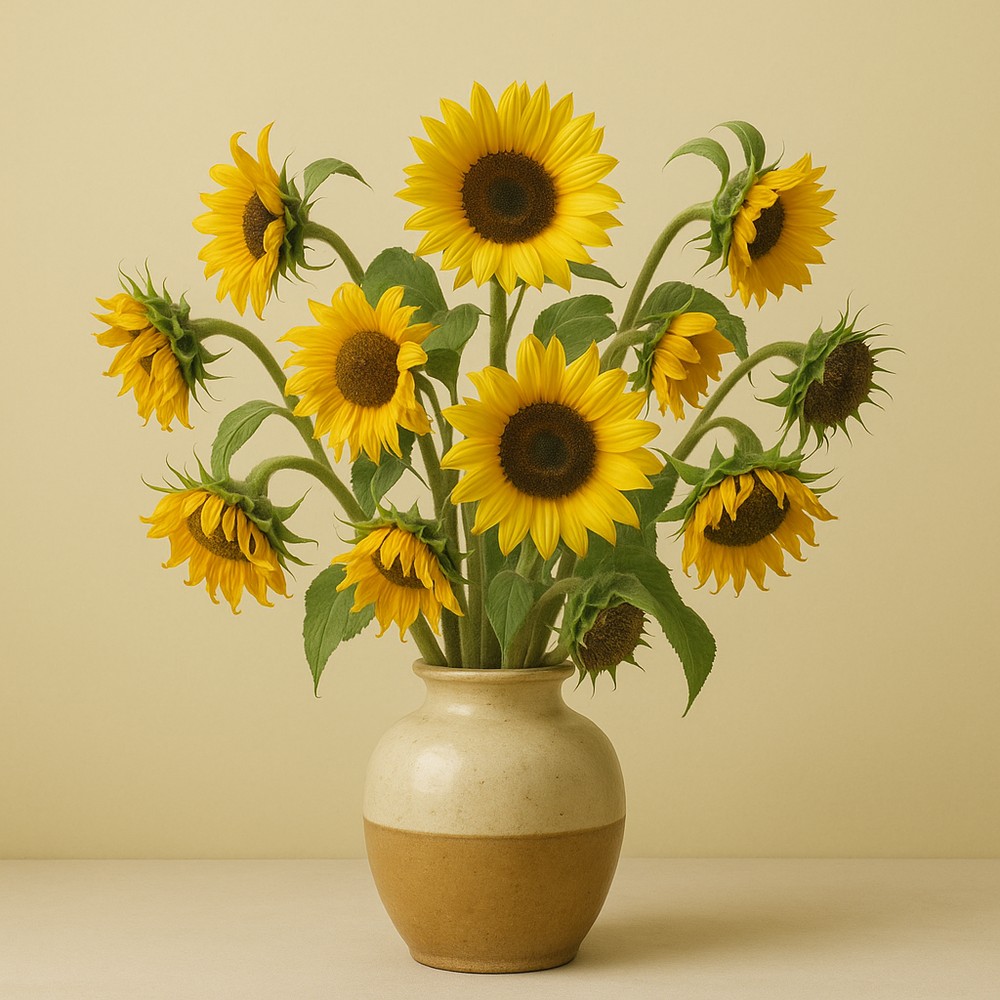
The original has fifteen flowers. Ask a model for fifteen and you tend to get "a bunch of sunflowers" — a plausible mass that reads as roughly right and comes out as thirteen, or seventeen, or a number that's hard to pin down because some blooms trail off into the background. The models paint the idea of fifteen, not fifteen.
And then there's the one thing a machine can check with zero judgment: the shape of the canvas. The real painting is a tall portrait, 92 by 73 centimeters — noticeably taller than it is wide. We asked for exactly that, in plain terms. Gemini 3 Pro got it right: a proper tall 3:4 portrait. GPT-5 Image returned a perfect square — and a square isn't a near-miss on "taller than it is wide," it's ignoring the instruction outright.
That's the whole finding in one detail. Not "the AI is bad" — Gemini's image is lovely and correctly shaped. It's that even the requirement impossible to fudge, the one a ruler settles, isn't safe to assume. If the canvas shape can come back wrong while everything looks right, so can the flower count, and so can anything else you didn't personally check.
The uncomfortable part
Here's the thing that should stick with you, and it's not about paintings.
A few years ago, AI images were easy to dismiss — six fingers, melted faces, text that turned to soup. You could tell at a glance. The failure was visible, which meant it was safe.
That era is over. These images are excellent. The failures didn't go away — they moved. They went from the surface, where you'd notice, to the details, where you won't unless you look. The model that can't count to fifteen now hides that behind a photograph so good you don't think to count.
Swap "sunflowers" for "line items in a contract," "figures in a chart," "steps in a set of instructions," or "citations in a report," and you have the actual reason this matters. The polish is real. The confidence is real. The facts underneath still need checking — more now, not less, precisely because nothing on the surface tells you to.
Grade them yourself
We built a scoring rubric and put it right here in the page — it's live, not a screenshot.
It's tiered on purpose. Tier A is machine-checkable and already scored — the canvas shape, pass or fail, no opinion involved. Tier B is countable: you count the flowers, you check the vase, and anyone can re-count to check your work. Tier C is the subjective stuff — mood, faithfulness — and it's capped at 20% of the score on purpose, so taste can't quietly decide the winner.
There's a slot to load the real painting. It's public domain — Van Gogh died in 1890 — and the link's right there. Drop it in, put it beside the two AI versions, and score all three. You'll see the impression land and the facts wobble in real time.
None of this means the models are useless. Gemini's painting is genuinely beautiful, and both would pass for real at a glance — that's exactly the point. The danger was never the obvious garbage; you catch that. It's the output that looks completely right and is wrong in one place you didn't think to check.
The next time an AI hands you something polished — a summary, a table, a draft that looks done — treat "it looks right" as the reason to check the facts, not the permission to skip it. The polish is free now. The facts still cost attention. That gap is where the expensive mistakes are going to live.